
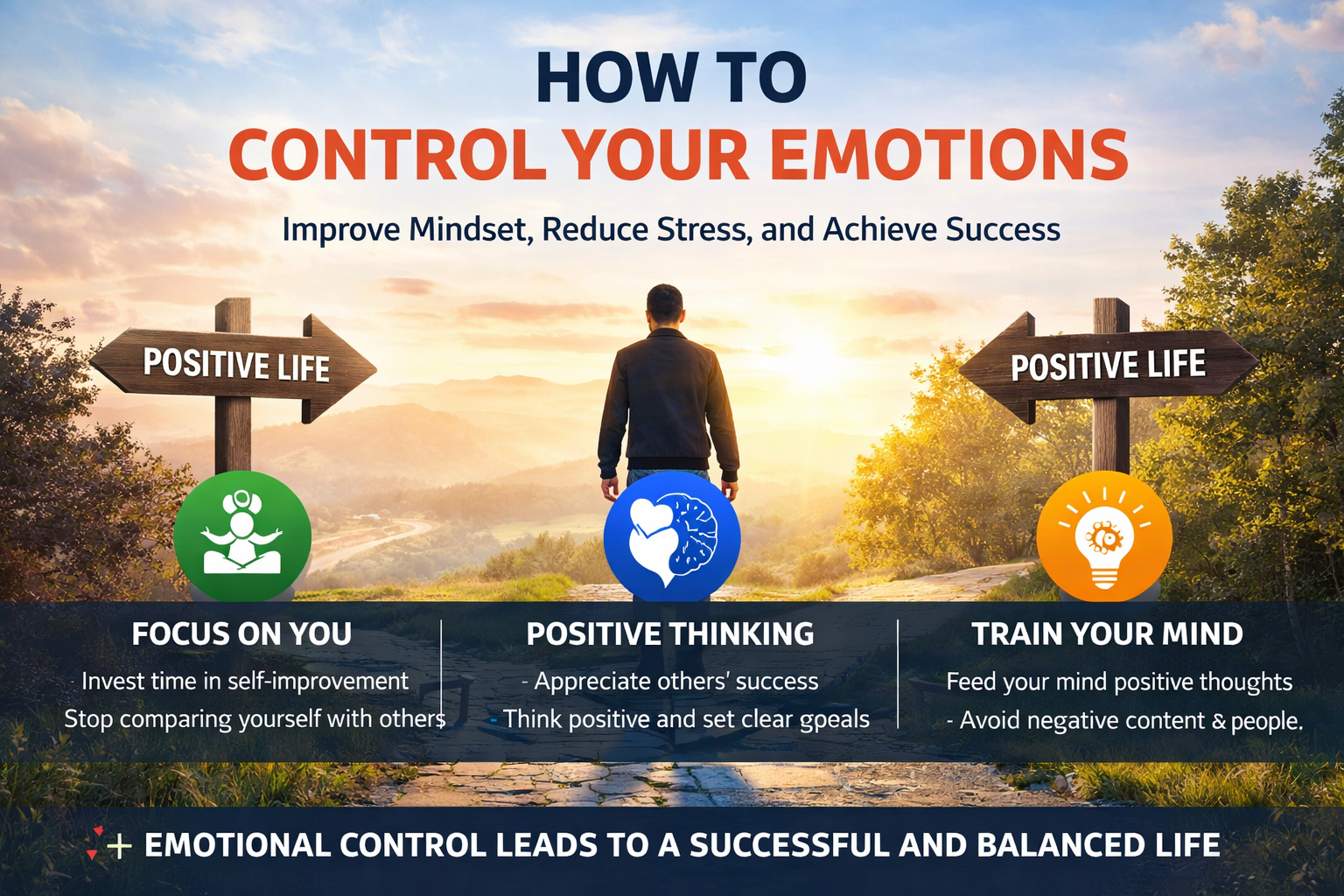
Why Controlling Your Emotions Is Essential for Success and Inner Peace
How to Control Your Emotions for Success and Peace
In today’s fast-moving world, emotions play a powerful role in shaping our decisions, relationships, and overall life direction. While emotions are natural and important, failing to control them can lead to stress, confusion, and poor decision-making.
Learning how to control your emotions is one of the most important life skills. It helps you stay calm under pressure, make better choices, and maintain a balanced and successful life.
In this article, we will explore practical ways to manage your emotions, improve your mindset, and create a more focused and positive life.
1. Focus More on Yourself, Not Others
One of the biggest mistakes people make is paying too much attention to others—what they are doing, achieving, or thinking. This often leads to comparison, jealousy, and dissatisfaction.
Instead, you should focus on your own growth and development.
What You Can Do:
- Invest your time in self-improvement
- Identify your strengths and weaknesses
- Stop comparing yourself with others
- Use your energy to achieve your own goals
When you focus on yourself, you gain clarity and direction in life.
Key Insight:
Real growth begins when you shift your focus inward.
2. Learn to Find Happiness in Others’ Success
Many people feel uncomfortable or jealous when others succeed. This negative mindset not only harms relationships but also limits personal growth.
On the other hand, when you genuinely feel happy for others, you develop a positive and abundant mindset.
Benefits of This Approach:
- Stronger and healthier relationships
- Increased positivity
- Better emotional balance
- A growth-oriented mindset
How to Practice:
- Appreciate others’ achievements
- Support and encourage people around you
- Replace jealousy with inspiration
Remember:
When you celebrate others, you create space for your own success.
3. Have a Clear Purpose in Life
Living without a clear goal can make life feel directionless. You may feel lost, unmotivated, and unsure about what to do next.
Having a purpose gives meaning to your actions and helps you use your time and energy effectively.
Steps to Find Your Purpose:
- Identify what truly matters to you
- Set long-term and short-term goals
- Create a plan and take consistent action
- Track your progress regularly
A clear purpose keeps you motivated and focused, even during challenging times.
Pro Tip:
A strong goal turns confusion into clarity.
4. Train Your Subconscious Mind with Positive Thoughts
Your subconscious mind is extremely powerful. It absorbs whatever you repeatedly think and believe. If you constantly think negatively, your mind starts accepting it as reality.
That’s why it is important to feed your mind with positive thoughts.
How to Strengthen Your Mind:
- Practice positive affirmations
- Read motivational content daily
- Surround yourself with positive people
- Avoid negative environments
Over time, your thoughts shape your behavior, and your behavior shapes your life.
Key Lesson:
Positive thoughts create a positive life.
5. Understand and Manage Your Emotions
Emotional control does not mean suppressing your feelings—it means understanding and managing them wisely.
When you control your emotions, you respond thoughtfully instead of reacting impulsively.
Ways to Improve Emotional Control:
- Pause before reacting
- Practice deep breathing or meditation
- Analyze situations logically
- Express your emotions in a healthy way
This helps you avoid unnecessary conflicts and make better decisions.
6. Build Emotional Intelligence
Emotional intelligence is the ability to understand your own emotions and the emotions of others. It plays a key role in personal and professional success.
Benefits of Emotional Intelligence:
- Better relationships
- Improved communication
- Strong decision-making skills
- Higher confidence
How to Develop It:
- Practice self-awareness
- Listen actively
- Show empathy
- Learn from your experiences
People with high emotional intelligence are more successful and respected.
7. Create a Balanced Lifestyle
A balanced life is essential for emotional stability. If you are constantly stressed or overworked, it becomes difficult to manage your emotions.
Tips for Balance:
- Maintain a healthy routine
- Get enough sleep
- Exercise regularly
- Take breaks when needed
Balance helps you stay calm, focused, and productive.
8. Turn Challenges into Opportunities
Life is full of challenges, but your response to those challenges matters the most. Instead of reacting emotionally, try to see problems as opportunities for growth.
What You Can Do:
- Stay calm during difficult situations
- Focus on solutions, not problems
- Learn from failures
- Keep a positive attitude
Every challenge teaches you something valuable.
Conclusion
Controlling your emotions is not about becoming emotionless—it’s about becoming stronger, wiser, and more aware. When you manage your emotions effectively, you improve every area of your life, from relationships to career.
By focusing on yourself, thinking positively, setting clear goals, and building emotional intelligence, you can create a life filled with success and peace.
Remember, your emotions are powerful—but you are more powerful than your emotions.
Final Thought:
Master your emotions, and you will master your life.