
- April 23, 2026
- 0 Comments
How Solitude Teaches You Independence: A Complete Guide to Self-Growth and Inner Strength
In today’s fast-paced and highly connected world, people are constantly surrounded by noise—social media, work pressure, relationships, and endless distractions. Yet, despite being surrounded by others, many individuals feel disconnected from themselves. This is where solitude becomes powerful.
Solitude is not loneliness. It is a conscious choice to spend time with yourself, understand your thoughts, and reconnect with your inner self. When used wisely, solitude can transform your mindset, improve your emotional strength, and teach you how to live independently.
In this article, we will explore how solitude teaches you independence and helps you build a stronger, more focused, and peaceful life.
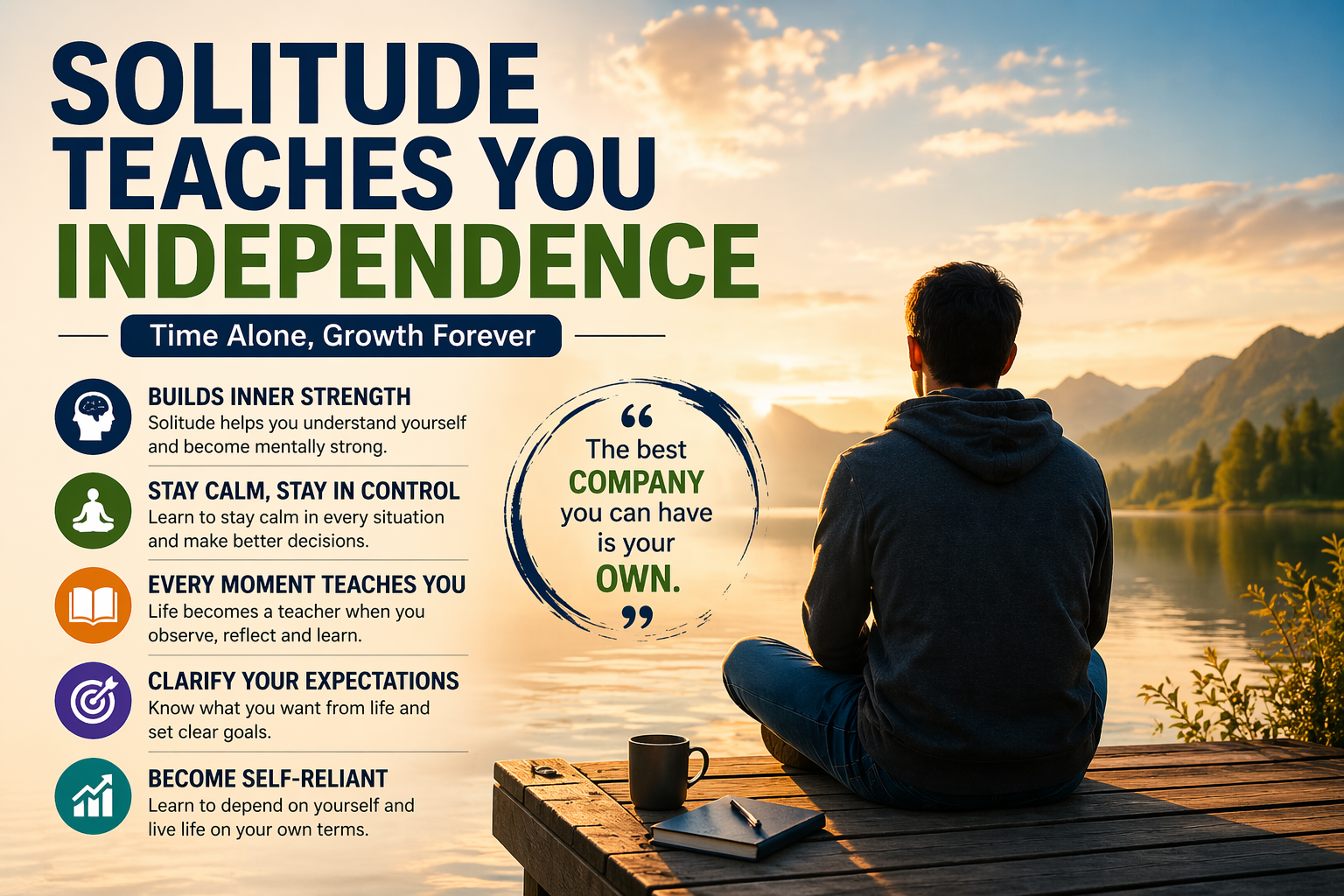
1. Solitude Helps You Become Mentally Strong
When you spend time alone, you begin to understand yourself better. You start observing your thoughts, emotions, fears, and desires without external influence. This self-awareness is the foundation of mental strength.
In solitude, you are forced to face your reality. Instead of escaping problems through distractions, you learn to deal with them directly. This builds resilience and prepares you to handle life’s challenges with confidence.
People who regularly spend time alone are often more emotionally balanced and less dependent on others for validation.
2. Learn to Stay Calm and Control Situations
One of the greatest lessons solitude teaches is how to remain calm in difficult situations. When your mind is quiet, you can think clearly and make better decisions.
Panic and impulsive reactions often lead to mistakes. However, when you develop the habit of staying calm, you gain control over your actions and responses.
Solitude allows you to practice mindfulness and patience. Over time, this helps you respond thoughtfully rather than react emotionally. This ability is crucial for both personal and professional success.
3. Every Moment Becomes a Learning Opportunity
When you are alone, you become more observant. You start noticing details in your life that you usually ignore. Every experience—good or bad—becomes a lesson.
Life is constantly teaching us something. Whether it’s a mistake, a failure, or a success, each moment carries valuable insights. Solitude gives you the space to reflect on these experiences and learn from them.
By developing this habit, you grow faster and make better decisions in the future. You stop repeating the same mistakes and begin to evolve as a person.
4. Clarify Your Expectations and Life Goals
Spending time alone helps you understand what you truly want from life. Often, people live according to others’ expectations without realizing their own desires.
Solitude gives you clarity. You start asking important questions:
What are my goals?
What do I expect from others?
What do I expect from myself?
When your expectations are clear, your life becomes more focused and less stressful. You avoid unnecessary conflicts and confusion because you know your priorities.
Clarity leads to better planning, stronger decisions, and a more meaningful life.
5. Develop Self-Reliance and Independence
One of the biggest benefits of solitude is that it teaches you to rely on yourself. When you learn to enjoy your own company, you stop depending on others for happiness.
Self-reliance builds confidence. You realize that you are capable of handling your life, making decisions, and solving problems on your own.
This independence is empowering. It frees you from the fear of being alone and helps you build stronger, healthier relationships—because you are with people by choice, not dependency.
6. Improve Focus and Productivity
Solitude removes distractions and allows you to concentrate deeply on your work or goals. In a quiet environment, your mind becomes more focused and creative.
Many successful people intentionally spend time alone to think, plan, and create. Whether it’s reading, writing, or learning a new skill, solitude enhances productivity.
When you control your time and attention, you achieve more in less time.
7. Strengthen Emotional Balance
Being alone helps you understand and manage your emotions better. Instead of reacting impulsively, you learn to process your feelings.
You become more patient, less reactive, and more emotionally stable. This balance improves your relationships and overall mental health.
Solitude gives you the space to heal, reflect, and grow emotionally.
8. Build a Deeper Connection With Yourself
In solitude, you connect with your true self. You discover your strengths, passions, and purpose. This connection brings inner peace and satisfaction.
When you know who you are, you stop seeking approval from others. You live authentically and confidently.
This self-connection is the key to long-term happiness and fulfillment.
Conclusion
Solitude is not something to fear—it is something to embrace. It teaches you independence, strengthens your mind, and helps you grow as a person.
By spending time alone, you gain clarity, confidence, and control over your life. You become self-reliant, emotionally strong, and mentally focused.
Start by taking small breaks from your busy routine. Spend a few minutes each day with yourself—thinking, reflecting, and learning. Over time, you will notice a powerful transformation in your life.
Remember, the strongest relationship you will ever have is with yourself. Nurture it through solitude, and you will unlock a life of peace, purpose, and true independence.