
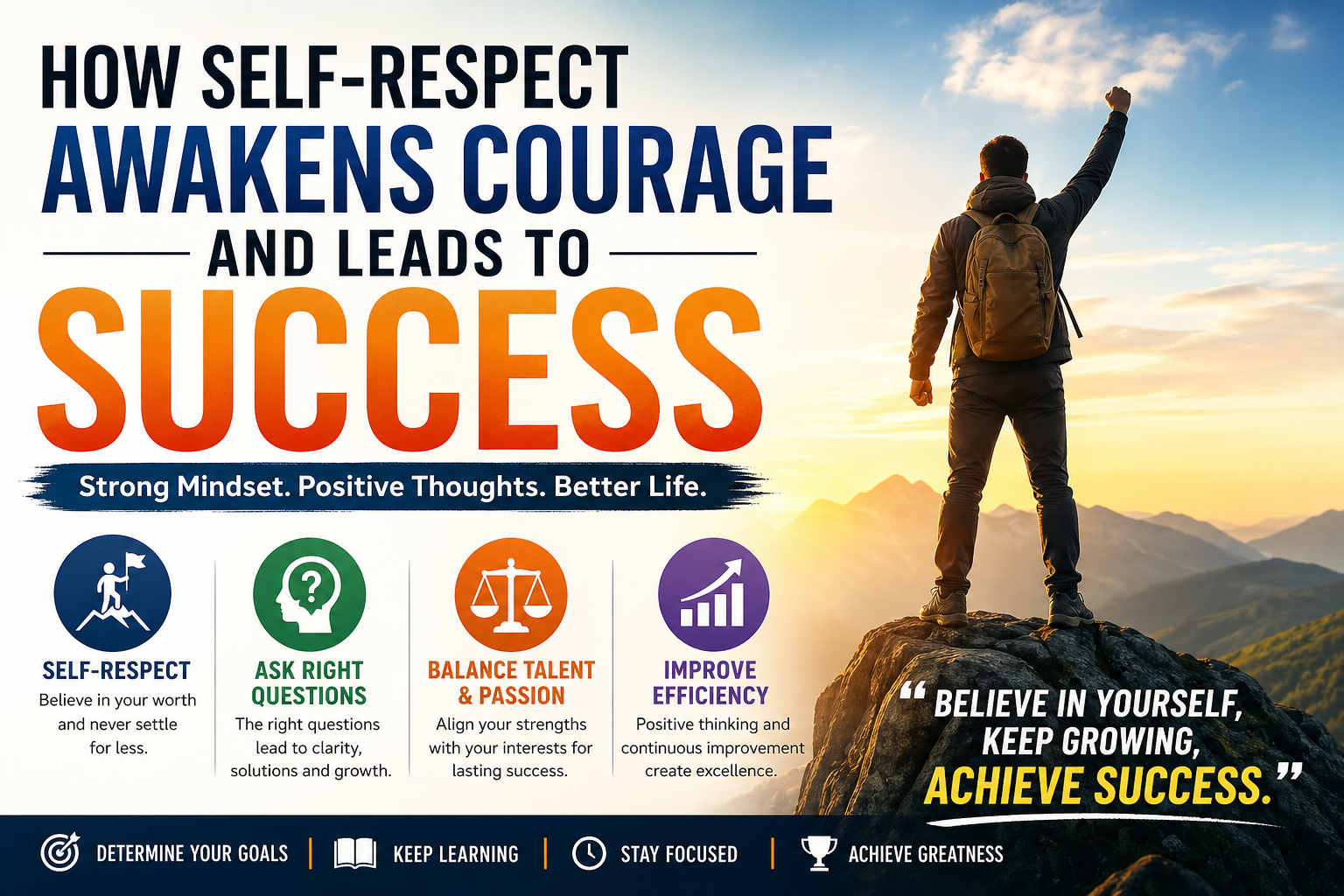
How Self-Respect Builds Confidence and Leads to Success
If You Want to Win, Develop Determination
Success is not just about talent or luck—it begins with self-respect. Self-respect, or self-esteem, is the inner strength that pushes a person to move forward even in the face of difficulties. When you value yourself, you naturally develop the courage to face challenges and the determination to overcome obstacles.
A person with strong self-respect does not settle for less. They refuse to accept failure as a permanent outcome and instead treat it as a learning opportunity. This mindset creates resilience, which is essential for long-term success. When you believe in your worth, you begin to take actions that align with your goals.
Determination is the driving force behind achievement. It is the “I will not give up” attitude that separates successful individuals from the rest. When combined with self-respect, determination becomes unstoppable. You begin to take responsibility for your actions, stay focused on your goals, and push through tough times.
To succeed in life, you must nurture your self-respect daily. Avoid negative self-talk, surround yourself with positive influences, and continuously remind yourself of your value. When you respect yourself, the world starts respecting you too.
The Power of a Positive Attitude
Why Asking the Right Questions Matters
A positive attitude is one of the most powerful tools for success. It shapes the way you think, act, and respond to situations. But positivity alone is not enough—you must also learn to ask the right questions.
Questions have the power to direct your thoughts. When you ask negative questions like “Why does this always happen to me?” your mind focuses on problems. But when you ask empowering questions such as “What can I learn from this?” or “How can I improve?” your brain starts searching for solutions.
Successful people are not necessarily those who have all the answers, but those who ask better questions. Asking the right questions helps you gain clarity, identify opportunities, and make better decisions.
For example, instead of saying:
- “I can’t do this,”
ask: “What skills do I need to develop to succeed?”
Instead of focusing on failure, shift your perspective toward growth. This simple change can transform your mindset and lead to continuous improvement.
A positive attitude combined with thoughtful questioning creates a powerful mindset. It helps you stay motivated, adapt to challenges, and keep moving forward, no matter the circumstances.
Mindset Matters: Balance Your Talent and Passion
Every individual has unique talents and interests. However, success lies in balancing both. Many people make the mistake of either following only their passion or relying solely on their talent. In reality, a combination of both is essential for sustainable growth.
Your talent is your natural ability—what you are good at. Your passion is what you love doing. When you align these two, you create a powerful foundation for success.
If you only follow your passion without developing your skills, you may struggle to achieve excellence. On the other hand, if you rely only on your talent but lack interest, you may lose motivation over time.
The key is to identify your strengths and connect them with your interests. Ask yourself:
- What am I naturally good at?
- What activities make me feel excited and engaged?
- How can I turn my skills into something meaningful?
By finding this balance, you not only improve your performance but also enjoy the journey. This leads to higher productivity, creativity, and long-term satisfaction.
Remember, success is not just about reaching a destination—it’s about enjoying the process. When your talent and passion work together, you unlock your full potential.
The Power of Positive Thinking: Improve Your Efficiency
Develop a Desire to Grow and Perform Better
Dreaming about success is easy, but achieving it requires consistent effort and efficiency. Positive thinking plays a crucial role in enhancing your productivity and performance.
When you think positively, you become more focused and energetic. You approach tasks with confidence and are more willing to take initiative. This leads to better results and increased efficiency.
However, positive thinking is not just about feeling good—it’s about taking action. To improve your efficiency, you must be willing to learn, adapt, and grow continuously.
Here are some practical ways to boost your efficiency:
- Set clear goals: Define what you want to achieve and create a plan.
- Learn new skills: Stay updated and invest in self-improvement.
- Manage your time effectively: Prioritize important tasks.
- Stay disciplined: Consistency is the key to success.
- Evaluate your progress: Regularly assess your performance and make improvements.
When you develop a strong desire to improve, you automatically become more productive. You stop wasting time on unimportant activities and focus on what truly matters.
Efficiency is not about doing more work—it’s about doing the right work in the right way. By combining positive thinking with smart strategies, you can achieve your goals faster and more effectively.
Conclusion
Self-respect, positive attitude, the right mindset, and continuous improvement are the pillars of success. When you respect yourself, you gain the courage to face challenges. When you think positively, you find solutions instead of problems. When you balance your talent and passion, you unlock your true potential. And when you focus on improving your efficiency, you move closer to your goals every day.
Success is not an overnight achievement—it is a journey of growth, learning, and persistence. Start by believing in yourself, asking the right questions, and taking consistent action.
In the end, remember this:
When your self-respect is strong, your courage becomes unstoppable—and success becomes inevitable.