
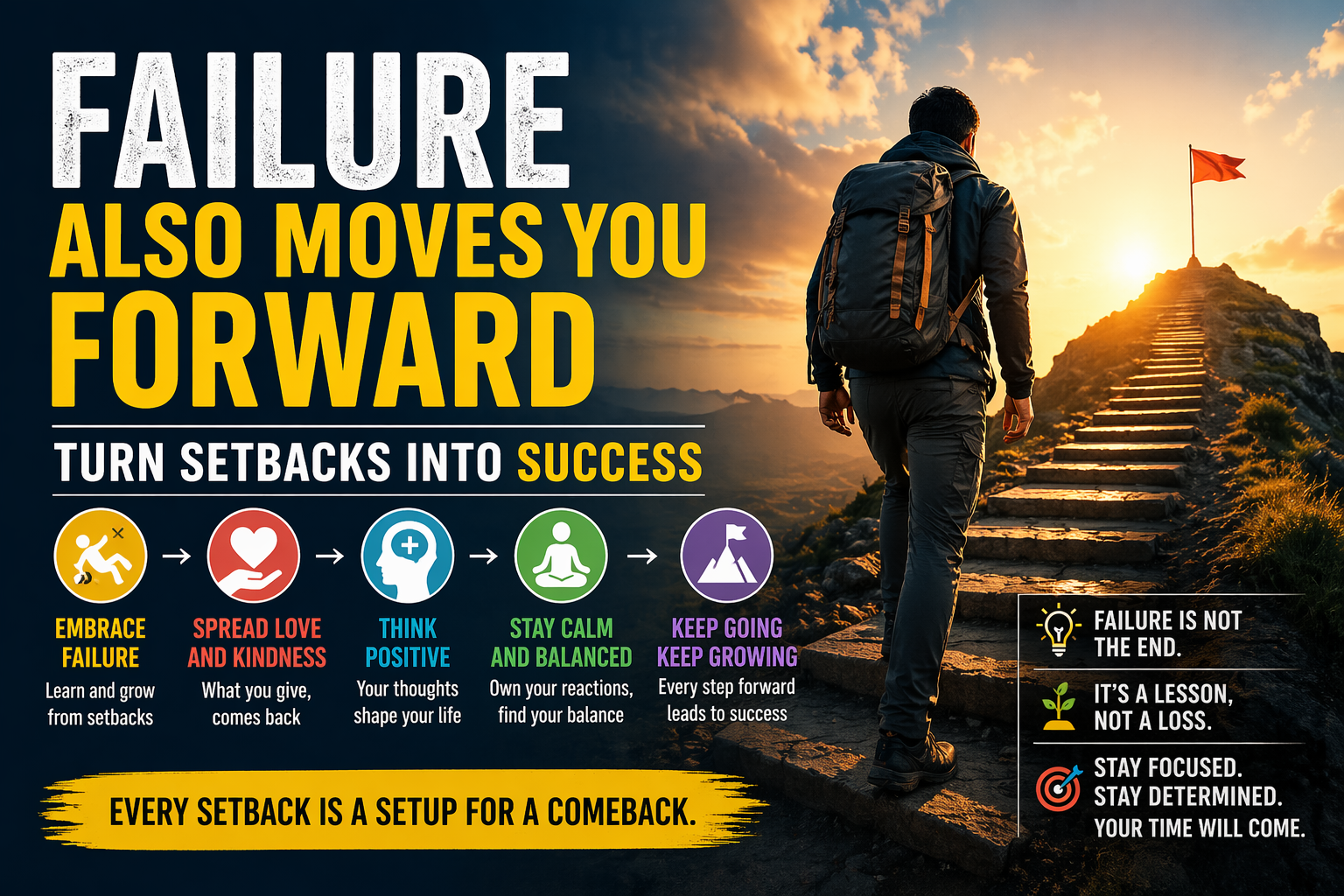
Failure Leads to Success: How to Turn Setbacks into Growth and Achievement
Failure is often seen as something negative—an obstacle that stops progress and breaks confidence. However, the truth is very different. Failure is not the opposite of success; it is a crucial part of the journey toward it. Every setback, every mistake, and every disappointment carries within it a lesson that pushes you forward. If you learn to understand and embrace failure, it can become your greatest teacher and a powerful tool for personal growth.
Understanding the Pain of Failure
It is important to acknowledge that failure hurts. Whether it is a missed opportunity, a rejected idea, or an unachieved goal, the emotional impact can be strong. Many people try to ignore this pain or suppress their feelings, but doing so only delays growth. Instead, you should allow yourself to feel the disappointment, reflect on the situation, and understand what went wrong.
When you face failure, ask yourself meaningful questions: What could I have done differently? What did this experience teach me? How can I improve next time? These reflections help you gain clarity and direction. Failure is not meant to break you—it is meant to reshape you into a stronger and wiser version of yourself.
Love and Kindness Always Come Back
Life works in a simple yet powerful way: what you give is what you receive. When you treat others with kindness, respect, and empathy, those same qualities return to you in unexpected ways. Building a habit of appreciating others and acknowledging their efforts creates a positive environment around you.
In both personal and professional life, your behavior plays a major role in shaping your relationships. When you support others, celebrate their success, and maintain a positive attitude, you naturally attract goodwill and trust. This support system becomes especially valuable during difficult times, helping you stay motivated and focused.
The Power of Positive Thinking
Your thoughts and emotions are the foundation of your actions. Everything begins in the mind. If your thinking is negative, filled with doubt and fear, it will reflect in your behavior and decisions. On the other hand, a positive mindset opens doors to new possibilities and solutions.
When faced with challenges, instead of focusing on the problem, try to focus on the opportunity within it. Positive thinking does not mean ignoring reality; it means approaching situations with a solution-oriented mindset. It allows you to remain calm under pressure and make better decisions.
Developing a positive mindset requires practice. Start by replacing negative thoughts with constructive ones. Surround yourself with positive influences, read motivational content, and remind yourself of your strengths. Over time, this habit will transform your outlook on life.
Take Control of Your Reactions
One of the most important skills in life is the ability to control your reactions. When something unexpected happens, your immediate response often determines the outcome. Many people react impulsively without thinking, which can lead to poor decisions and unnecessary stress.
Instead, practice pausing before reacting. Take a moment to understand the situation, analyze your emotions, and then respond thoughtfully. This simple habit can significantly improve your decision-making ability and help you handle difficult situations more effectively.
Being mindful of your reactions also helps in maintaining healthy relationships. When you respond calmly and rationally, you avoid conflicts and build a reputation of being dependable and composed.
Maintain Balance in Life
While passion and dedication are important, they should not come at the cost of balance. Many individuals become so focused on their professional identity that they forget about their personal well-being. This imbalance can lead to stress, burnout, and dissatisfaction.
It is essential to maintain a healthy balance between your work and personal life. Your job is only one aspect of who you are—it does not define your entire identity. Take time for yourself, engage in activities you enjoy, and nurture your relationships.
When you create balance in your life, you become more productive, creative, and emotionally stable. You are able to approach challenges with a clear mind and make better decisions.
Separate Your Identity from Your Work
One of the biggest mistakes people make is associating their self-worth with their professional success. When things go wrong at work, they feel like they have failed as a person. This mindset can damage confidence and hinder growth.
Understand that your work is something you do, not who you are. Separating your identity from your profession allows you to view failures objectively. Instead of taking them personally, you can analyze them as learning experiences and improve your approach.
This shift in perspective not only protects your self-esteem but also encourages continuous growth and development.
Build Emotional Strength and Resilience
Life is full of ups and downs, and emotional strength is what helps you navigate through them. Resilience is the ability to bounce back from setbacks and keep moving forward despite challenges.
To build emotional strength, focus on self-discipline, maintain a positive mindset, and stay committed to your goals. Surround yourself with supportive people who encourage and uplift you. Practice mindfulness and stress management techniques to stay calm and focused.
Remember, every challenge you face adds to your strength. The more you overcome difficulties, the more confident and capable you become.
Learn, Adapt, and Keep Moving Forward
Failure is only valuable if you learn from it. Each setback provides an opportunity to adapt and improve. Instead of repeating the same mistakes, use your experiences to refine your strategies and approach.
Successful people are not those who never fail, but those who never stop trying. They learn, adapt, and keep moving forward regardless of the obstacles they face. This persistence is what ultimately leads to success.
Conclusion: Embrace Failure as a Stepping Stone
Failure is not something to fear—it is something to embrace. It teaches you valuable lessons, builds your character, and prepares you for success. By maintaining a positive mindset, controlling your reactions, and staying consistent in your efforts, you can turn any setback into an opportunity.
Remember, every failure brings you one step closer to success. Instead of letting it hold you back, let it push you forward. Keep learning, keep growing, and most importantly, keep moving ahead.