
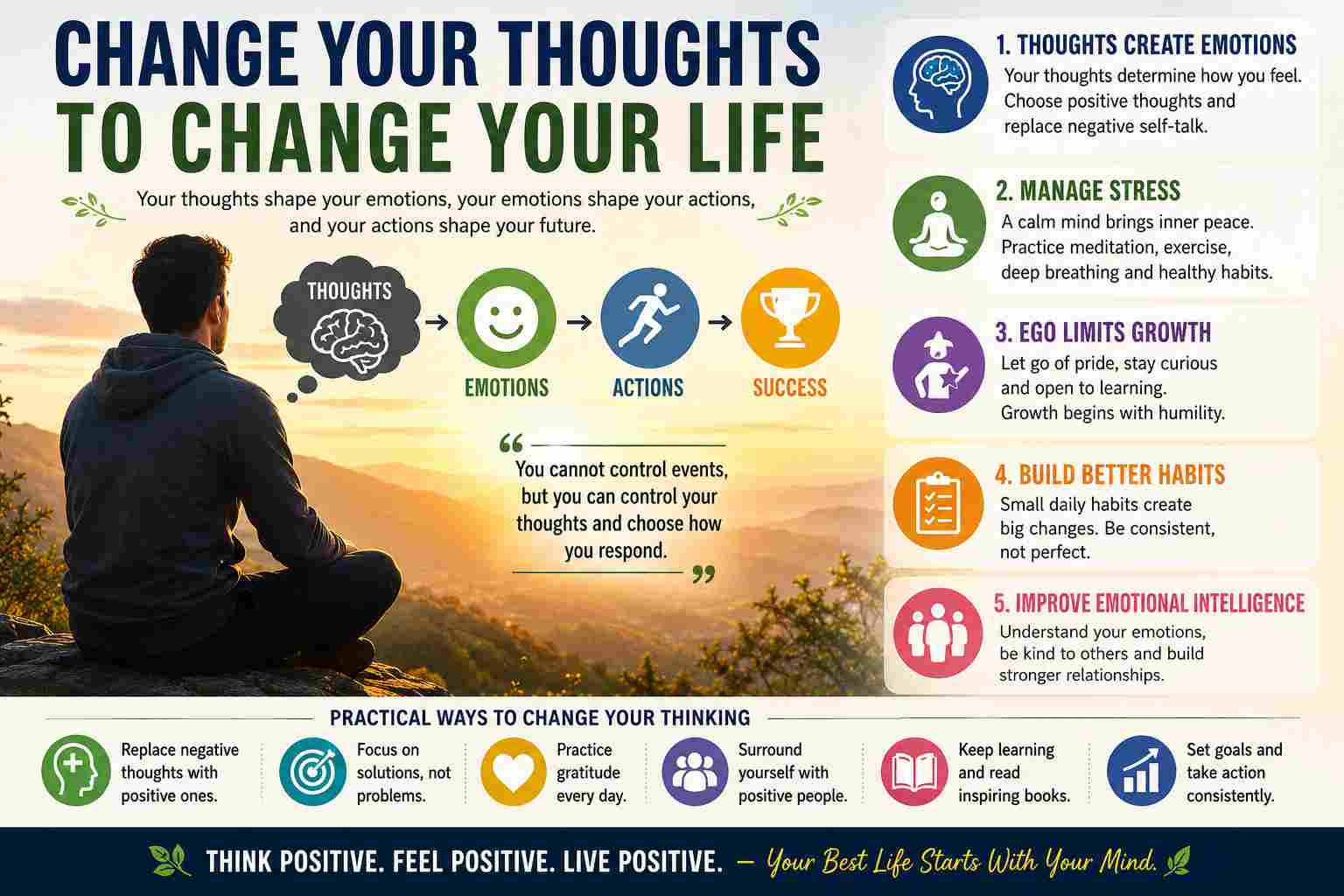
Change Your Thoughts to Change Your Life
Have you ever wondered why two people can face the same situation but react completely differently? One remains calm and hopeful, while the other becomes anxious and discouraged. The difference is not the situation itself—it is the way each person thinks.
Your thoughts are the foundation of your emotions, decisions, habits, and ultimately your future. Learning to control your mindset is one of the most valuable life skills you can develop. When you change your thoughts, you begin to change your emotions. As your emotions improve, your actions become more positive, your habits become stronger, and your life gradually transforms.
This article explains how positive thinking, emotional awareness, and healthy habits can help you build a happier and more successful life.
Thoughts Create Your Emotions
Every emotion begins with a thought. Before you feel happy, excited, worried, or angry, your brain has already interpreted a situation and created a story about it.
Imagine receiving constructive feedback at work. One person thinks, “This is an opportunity to improve,” while another thinks, “I’m not good enough.” Although both people received the same feedback, their emotional reactions are completely different.
This simple example shows that circumstances do not control our emotions. Our interpretation of those circumstances does.
By practicing positive thinking and replacing negative self-talk with encouraging thoughts, you can improve your confidence, reduce stress, and develop emotional resilience.
The Power of Positive Thinking
Positive thinking does not mean ignoring life’s challenges. Instead, it means approaching difficulties with hope, confidence, and the belief that solutions exist.
People with a positive mindset often:
- Handle stress more effectively.
- Recover faster from setbacks.
- Build stronger relationships.
- Make better decisions.
- Stay motivated during difficult times.
- Experience greater happiness and life satisfaction.
Optimism allows you to focus on opportunities instead of obstacles, making it easier to achieve long-term success.
Reduce Stress by Managing Your Mind
Stress has become a normal part of modern life, but constant stress can affect both your physical and mental health.
Fortunately, you cannot always control what happens around you, but you can control how you respond.
Healthy habits that reduce stress include:
- Daily meditation or mindfulness.
- Regular physical exercise.
- Deep breathing techniques.
- Quality sleep.
- Reading inspiring books.
- Spending time with supportive people.
- Limiting negative social media consumption.
Protecting your peace of mind should become a daily habit rather than an occasional practice.
Your Ego Can Limit Personal Growth
One of the biggest obstacles to success is the ego.
The ego often convinces us that we already know everything, making us resistant to learning new ideas or accepting constructive criticism.
Successful people remain curious throughout their lives. They understand that learning never stops.
When you replace pride with curiosity, you become more adaptable, creative, and open to new opportunities.
Ask yourself:
- What can I learn today?
- How can I improve?
- What limiting belief should I let go of?
These simple questions encourage continuous personal growth.
Build Better Habits for a Better Life
Your future is shaped by what you repeatedly do—not by what you occasionally accomplish.
Small daily habits create remarkable long-term results.
Consider adding these habits to your routine:
- Read for 20 minutes every day.
- Exercise regularly.
- Practice gratitude every morning.
- Learn one new skill each month.
- Limit unnecessary screen time.
- Write down your daily goals.
- Spend time reflecting on your progress.
Consistency matters far more than perfection. Even small improvements made every day lead to extraordinary achievements over time.
Develop Emotional Intelligence
Emotional intelligence is the ability to recognize, understand, and manage your emotions while also understanding the emotions of others.
People with high emotional intelligence:
- Stay calm under pressure.
- Communicate effectively.
- Resolve conflicts peacefully.
- Build stronger relationships.
- Make thoughtful decisions instead of emotional reactions.
Improving emotional intelligence begins with becoming aware of your thoughts and choosing healthier responses.
Practical Ways to Change Your Thinking
If you want lasting change, start with these simple practices:
- Replace negative thoughts with constructive ones.
- Focus on solutions rather than problems.
- Practice gratitude every day.
- Surround yourself with positive people.
- Learn from failures instead of fearing them.
- Read motivational and educational books.
- Set realistic goals and celebrate small victories.
- Stop comparing yourself to others.
- Believe that growth is always possible.
- Take action, even when progress feels slow.
These habits strengthen your mindset and gradually transform your outlook on life.
Final Thoughts
Changing your life does not begin with changing your circumstances—it begins with changing your thoughts.
Your thoughts influence your emotions. Your emotions influence your actions. Your actions become habits, and your habits create your future.
Every positive decision you make today becomes an investment in a better tomorrow.
Remember, lasting success is not achieved through one dramatic change. It is built through thousands of positive thoughts, wise decisions, and consistent daily habits.
Start today. Think better. Feel better. Live better.
Frequently Asked Questions (FAQs)
How do thoughts affect emotions?
Thoughts shape how we interpret situations, and those interpretations create emotional responses such as happiness, fear, confidence, or anxiety.
Can positive thinking really change your life?
Yes. Positive thinking improves emotional well-being, reduces stress, increases resilience, and encourages healthier habits that contribute to long-term success.
What are the best daily habits for personal growth?
Reading, exercising, practicing gratitude, setting goals, learning continuously, and maintaining a positive mindset are among the most effective habits.
Why is emotional intelligence important?
Emotional intelligence helps you manage stress, improve relationships, communicate effectively, and make better decisions in both personal and professional life.