
- April 29, 2026
- 0 Comments
How to Improve Your Work Efficiency and Achieve Success: Proven Strategies
Introduction
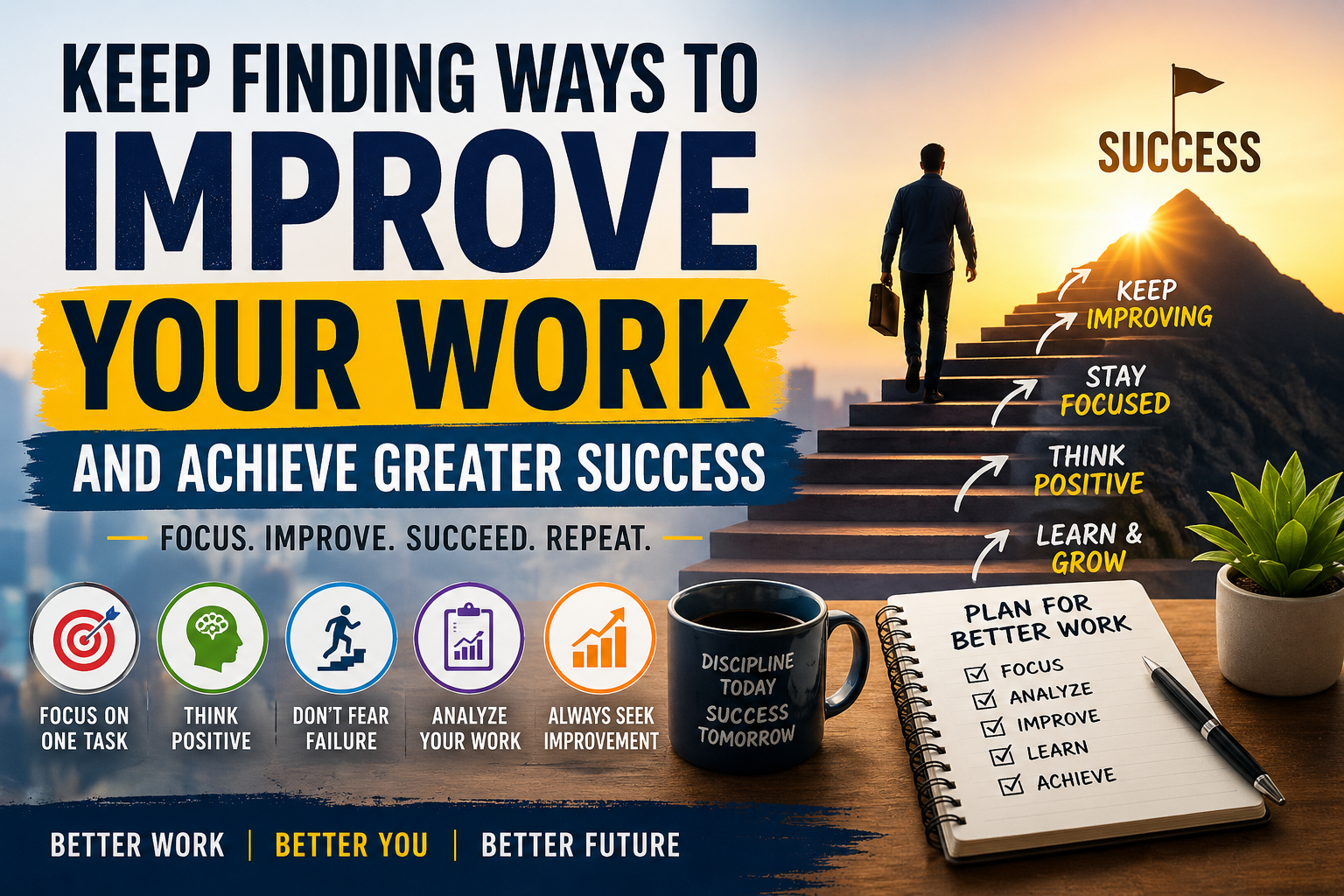
In today’s competitive and fast-paced world, simply working hard is not enough. What truly sets successful people apart is their constant effort to improve their work. Whether you are a student, professional, entrepreneur, or blogger, the habit of continuously refining your skills and performance can take you to the next level.
Improvement is not a one-time process—it is a continuous journey. Those who keep learning, adapting, and upgrading themselves stay ahead in life. In this article, we will explore practical and powerful ways to improve your work and achieve long-term success.
1. Focus on One Task at a Time
One of the biggest mistakes people make is trying to do multiple tasks at once. While multitasking may seem productive, it often reduces efficiency and quality. When your attention is divided, you are more likely to make mistakes and feel overwhelmed.
Instead, focus on one task at a time. Give it your full attention and energy. This approach not only improves the quality of your work but also helps you complete tasks faster.
Deep focus allows you to understand the details, think creatively, and produce better results. Whether you are writing, studying, or managing a project, single-tasking is the key to excellence.
2. Maintain a Positive Mindset
Your mindset plays a crucial role in determining your success. A negative mindset creates doubt, fear, and hesitation, while a positive mindset builds confidence, motivation, and resilience.
When you approach your work with positivity, you naturally perform better. You are more willing to take challenges, solve problems, and stay committed to your goals.
Positive thinking also improves your mental health. It reduces stress and helps you stay calm in difficult situations. Train your mind to focus on solutions rather than problems. Remind yourself of your goals and believe in your ability to achieve them.
3. Think About Success, Don’t Fear Failure
Fear of failure is one of the biggest barriers to improvement. Many people avoid trying new things because they are afraid of making mistakes. However, failure is not the opposite of success—it is a part of it.
Every successful person has faced failures at some point. What makes them different is their ability to learn from those failures and keep moving forward.
Instead of fearing failure, focus on what you can learn from it. Each mistake teaches you something valuable. It helps you improve your strategy, strengthen your skills, and build resilience.
When you shift your mindset from fear to learning, you unlock your true potential.
4. Regularly Analyze Your Work
If you want to improve, you must evaluate your performance regularly. Take time to analyze your work and identify areas where you can do better.
Ask yourself questions like:
- What went well?
- What could be improved?
- What mistakes did I make?
- How can I avoid them in the future?
This self-analysis helps you understand your strengths and weaknesses. It also gives you clarity on what steps to take next.
You can also seek feedback from others. Sometimes, an outside perspective can help you see things you might have missed.
5. Always Leave Room for Improvement
No matter how skilled or experienced you are, there is always room for improvement. The moment you think you know everything, your growth stops.
Successful people are lifelong learners. They constantly upgrade their knowledge, learn new techniques, and adapt to changing trends.
Stay curious. Read books, watch tutorials, attend workshops, and learn from experts in your field. Even small improvements made consistently can lead to big results over time.
Remember, progress is more important than perfection.
6. Develop Discipline and Consistency
Improving your work is not about occasional effort—it requires discipline and consistency. You need to show up every day and give your best, even when you don’t feel motivated.
Create a routine that supports your goals. Set clear priorities and stick to them. Consistent effort builds momentum and leads to long-term success.
Discipline also helps you avoid distractions and stay focused on what truly matters. Over time, it becomes a habit, and success becomes a natural outcome.
7. Adapt to Change and Stay Flexible
The world is constantly changing, and those who fail to adapt are left behind. New technologies, trends, and methods are always emerging.
To improve your work, you must be willing to change and evolve. Be open to new ideas and approaches. Don’t resist change—instead, embrace it as an opportunity to grow.
Flexibility allows you to handle challenges more effectively and find creative solutions. It also makes you more resilient in uncertain situations.
8. Build Confidence Through Action
Confidence does not come from thinking—it comes from doing. The more you take action, the more confident you become.
Start small, take consistent steps, and gradually challenge yourself. Each completed task builds your confidence and motivates you to aim higher.
Avoid overthinking and focus on execution. Action is the bridge between goals and achievements.
Conclusion
Improving your work is a continuous and rewarding journey. By focusing on one task at a time, maintaining a positive mindset, learning from failure, analyzing your performance, and staying open to growth, you can achieve remarkable success.
Remember, success is not about being perfect—it’s about getting better every day. Even small improvements, when done consistently, can lead to extraordinary results.
Keep learning, keep improving, and never stop growing. Your dedication today will shape your success tomorrow.